




























The "green canker" of Palhal, American acacia devours cultivated fields and threatens families' livelihoods
Cidade de Nova Sintra, May 21, 2026 (Bravanews) - The landscape in the town of Palhal is changing, and not for the better. Where once you could see the clear horizon prepared for dryland sowing, now stands a wall of twisted branches and jagged peaks. The American acacia has gone from being a resilient tree to becoming the main enemy of local farmers, who watch helplessly as their land is "asphyxiated".
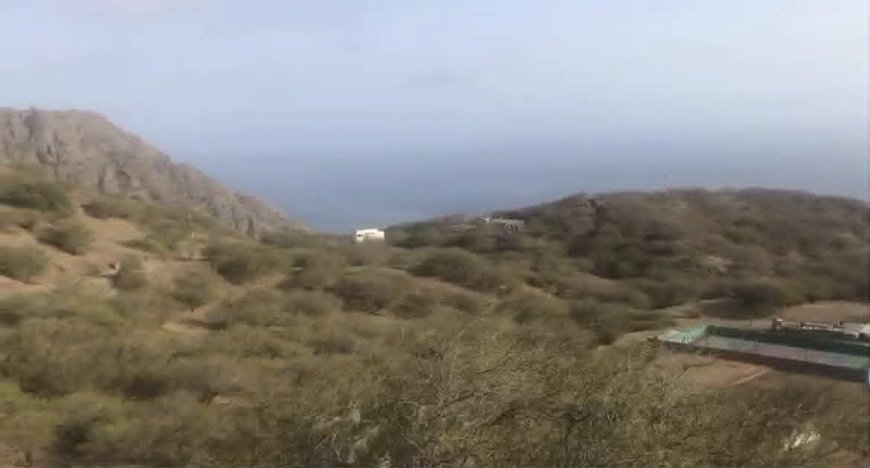
For the farmers of Palhal, the fight against nature has become an unequal war. The American acacia (Robinia pseudoacacia), an exotic species with an aggressive ability to adapt, has found the perfect habitat in the soil of this region to expand.
The problem has reached critical proportions: on many properties, the density of vegetation is so high that it is no longer possible to get through with tools or animals. Small producers, who depend on the seasonal rains to grow corn and beans, see their room for maneuver reduced to small patches of land that the bush has yet to conquer.
The main damage identified by the community includes soil erosion and loss of nutrients, because the plant absorbs the moisture deep down, leaving the surface too dry for traditional crops, the disabling of infrastructure because access roads to land and pastures have been blocked by the density of the bushes and danger to livestock, because as well as reducing the available pasture, the long thorns cause serious injuries to animals that try to penetrate the bush.
The population's revolt is not just due to the biological invasion, but to what they call "bureaucratic inertia". According to the community leaders, several letters have been sent and verbal requests made to the municipal services and the Ministry of Agriculture. The response, however, has been non-existent.
"We don't have the means to fight this on our own. Today we cut with an axe and tomorrow ten new branches are born. We need heavy machinery, we need a government plan. We feel abandoned to our fate," says Manuel dos Santos, a farmer who has seen his cultivable area halved in less than three years.
The community argues that, without public intervention using deep eradication methods (such as uprooting with backhoes), Palhal will lose all its productive capacity in less than a decade.
In addition to agriculture, the acacia invasion is beginning to have public safety implications. The thickness of the undergrowth near inhabited areas has served as a hiding place and encouraged the proliferation of pests, as well as hindering visibility on certain secondary access routes.
Local farmers are considering organizing a petition to demand a formal response from the authorities. The aim is clear: to ensure that the Territorial Planning Plan includes a specific sum for the cleaning and recovery of invaded soils in the Palhal.
While help doesn't arrive, the men and women of Palhal continue their daily vigil, looking apprehensively at the fields where the green of the acacia stubbornly extinguishes the hope of a bountiful harvest.